
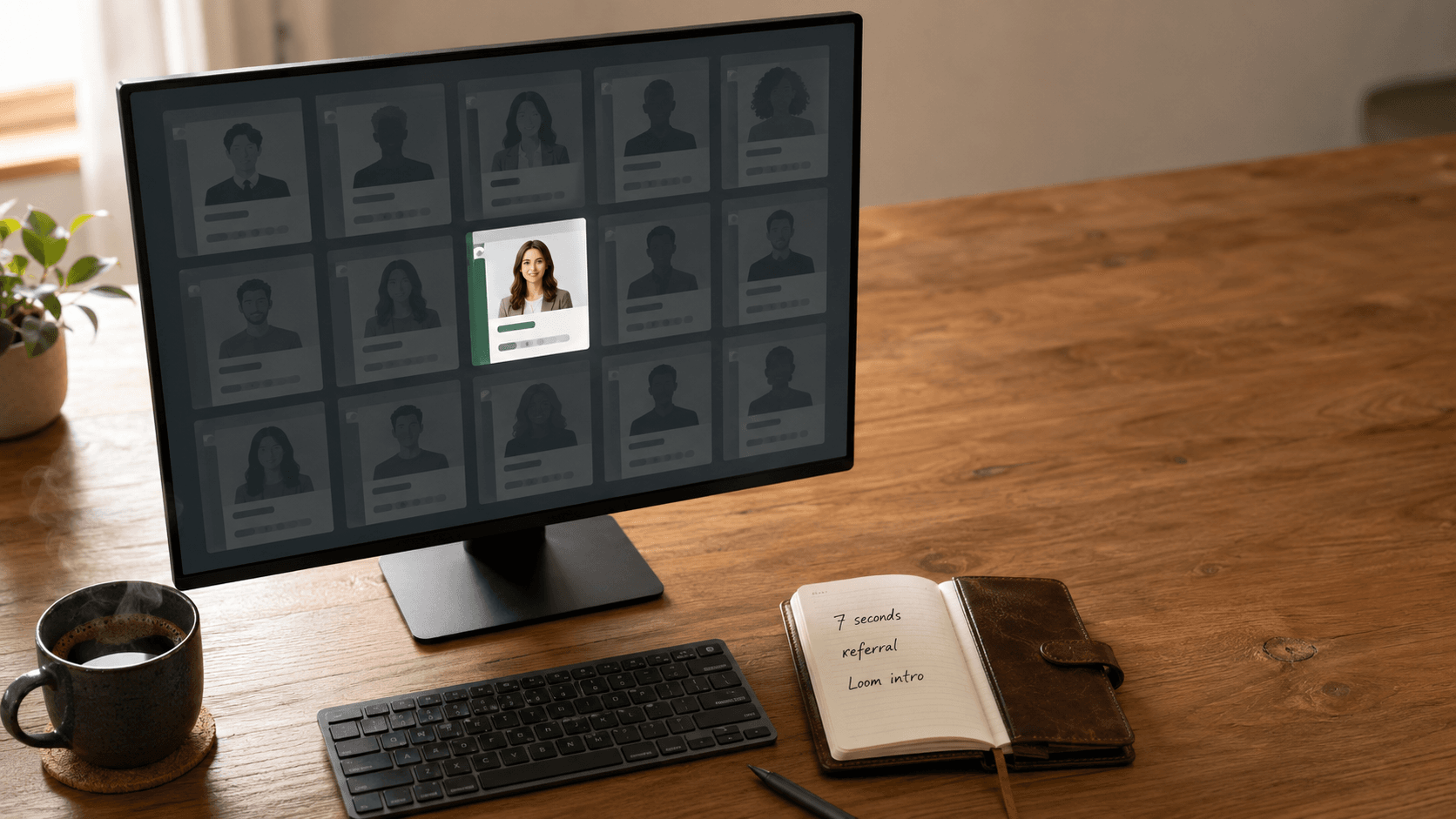
A single fully remote posting on LinkedIn collects two to three times the applicants of an equivalent on-site role. The recruiter scanning your résumé spends roughly seven seconds on the first pass, and most of the 300-plus people who applied are eliminated by software before a human ever opens the file. None of that is about talent. It is about what signals you sent in the 48 hours after the job went live. Here is what the 1% who reach a real interview do at every stage, written from the recruiter side of the table.
Where 99% disappear (and why it has nothing to do with talent)
A remote-friendly posting on LinkedIn or We Work Remotely typically pulls 200 to 400 applications inside the first two days. LinkedIn's own talent data shows that while only about 9% of postings are fully remote, those postings attract roughly 18% of all applicants. That ratio is the math you are fighting. Apply on day five and the recruiter is already in screening calls with the day-one candidates.
The applications die in five predictable places.
Stage one is the applicant tracking system. Most companies route every résumé through Greenhouse, Lever, Workday, or one of a few similar tools. The system parses your résumé into structured fields and matches against the role's required skills. Jobscan's research found that essentially every Fortune 500 company uses an ATS, and most mid-market companies do too. The often-quoted "75% of résumés never reach a human" figure has been repeated for over a decade and is hard to verify cleanly. Treat it as directionally right and methodologically fuzzy. The actual filtering rate varies wildly by employer. What does not vary: if your résumé does not contain the exact phrasing the recruiter searches for, you do not surface in the results, and you are not in the conversation.
Stage two is the human scan. Ladders' eye-tracking research put a number on it: recruiters spend about 7.4 seconds on the first résumé pass. That is enough time for them to read your most recent title, your most recent employer, and one or two lines of result. If those three pieces of information do not earn a second look, the file gets closed.
Stage three is the cover note or message body. Most are deleted unread. The ones that do get read tip decisions, especially at smaller and async-heavy companies.
Stage four is the first reply after the recruiter contacts you. Slow, unstructured replies sink candidates more often than weak résumés do. Recruiters scheduling remote roles are quietly testing whether you can operate the same tools the team uses every day.
Stage five is the follow-up after the interview. Almost nobody does this well. Doing it well is where lateral candidates beat candidates with stronger pedigree.
Stage one: the résumé that survives the ATS and the seven seconds
Take the job description and find the three most-repeated skills or competencies. Use the recruiter's exact phrasing for those three on your résumé. Not synonyms. If the posting says "Salesforce administration," do not write "CRM systems experience." The ATS matches strings, and the recruiter who later searches the database types the words from the posting back into the search bar.
Then attach a number to each of those three. "Salesforce administration" by itself is forgettable. "Salesforce administration for a 40-rep team, cut report generation from three hours to twenty minutes" is one of the lines a recruiter remembers from the seven-second scan. The number gives the recruiter a reason to slow down. The phrasing makes sure your résumé surfaces when they search.
The top third of the page does almost all the work. The recruiter's eyes go to your most recent title, your most recent company, and the bullet directly under it. If your strongest result is the fourth bullet down on the second page, it might as well not exist. Move one quantified outcome to the top of every role. A career summary that says "results-driven professional with a passion for collaboration" is a wasted line. Replace it with one sentence: what you do, who you do it for, and one number that proves you do it well.
For remote-specific roles, add one line near your skills section that pairs a concrete tool with a measurable outcome. "Led a 12-person product launch across three time zones using Notion and Loom, zero missed deadlines" tells a recruiter you have actually operated a distributed team. "Comfortable with remote collaboration tools" tells them nothing. The first sentence is the kind of line you cannot fake. The second is on every résumé in the stack.
Stage two: the cover note recruiters actually read
Most career advice argues about whether cover letters still matter. The honest answer is that they matter unevenly. At large enterprises with a coordinator filtering by ATS keyword, the cover letter is rarely opened. At smaller companies, fully remote startups, and async-heavy teams, the cover note is the first sample of your written communication, which happens to be the primary skill the role requires. It gets read.
If you are going to write one, keep it short enough that the recruiter reads it in the time it takes them to drink half a coffee. Three to five sentences. The first sentence is one specific thing you know about the company that you could not have written about any other employer. Not "I am excited about your mission" but "Your engineering blog post about how you cut Postgres replication lag was the reason I dug into the role." That sentence proves you read the company before applying. Roughly two of every ten cover notes pass that test. Yours should be one of the two.
The second and third sentences are the one result from your résumé that maps most directly to the role's biggest stated challenge, written in plain language. The closing sentence is what you want next: a 20-minute call, a portfolio link, a take-home if that is how they hire. Make the next step easy for the recruiter to say yes to.
If you have a 60 to 90 second Loom intro recorded, drop the link in the cover note. Recruiters who watch a candidate intro video tend to convert those candidates to interviews at noticeably higher rates than candidates who skip the video step, based on what hiring teams I have worked with report. The investment is one afternoon to record a clean version you can reuse for every application that month.
The other thing that beats every cover note ever written: a referral. LinkedIn's data on referral hires consistently shows that referred candidates are hired at three to four times the rate of cold applicants, move through the funnel faster, and stay in the role longer. If anyone you have ever worked with is at the target company, ask them to forward your application internally. A two-line message to a former colleague is worth more than a perfect cover letter sent through the public portal.
Stage three: the async signals you did not know you were sending
The day after you apply, if the role is well-fit, you get an email from a recruiter. From the moment that email arrives, you are being evaluated for remote competence in ways nobody names out loud.
Response time is the loudest signal. Replying within four hours during business hours is strong. Replying within 24 hours is acceptable. Replying after 48 hours starts to read as either unavailable or unenthusiastic, regardless of why you took that long. Recruiters working remote roles think about how you would handle a Slack ping from a colleague in a different time zone, and your reply latency is the closest proxy they have.
Reply structure matters almost as much. Compare two responses. Response one: "Sounds great, let me know your availability." Response two: "Thanks. Three windows that work this week: Tuesday 10 to noon Eastern, Wednesday 2 to 4 Eastern, Friday 9 to 11 Eastern. Two questions before we talk: what does the first 90 days look like for this role, and is the team distributed across one or several time zones?" Both are polite. Only one shows that you can run an async conversation without three rounds of back and forth. The recruiter will not tell you "response two was better." They will just move that candidate up the queue.
If the recruiter sends you a calendar booking link, use it without negotiation. If you cannot make any of the offered times, propose three alternatives in one message rather than asking what else they have. Calendar friction in a remote interview process is the single most tedious signal a candidate sends, and it is fully avoidable.
Stage four: the interview signals that actually move the decision
On the screening call, the recruiter is not just listening to your answers. They are checking whether your remote setup looks like the setup of someone who works remotely every day. Clear audio, a lit face rather than a silhouette against a bright window, a camera angle at roughly eye level instead of staring up at a ceiling fan. None of this requires fancy equipment. A $40 ring light and a stack of books under a laptop solve all three problems for the cost of a dinner out.
Bring numbers to every answer. "We improved collaboration on the team" is the sentence recruiters hear forty times a week and remember none. "We cut the time from kickoff to first design review from 14 days to 6 by moving the brief into a shared Notion template" is the sentence that survives the post-interview debrief. Specificity is rare in this stack of interviews, which is exactly why it wins.
Have two questions ready that prove you read more than the job description. Pull one detail from the company's last quarterly update, a recent product launch, or something the hiring manager has written publicly. Ask a question that references that detail. The recruiter has no easy way to check whether you researched the company before the call, so this is the cheapest credibility move in the entire process.
Send a link, do not promise samples. If they ask about past work, the candidates who say "I can share samples on request" lose to the candidates who paste a single Notion link or Loom playlist into the chat during the call. Async-ready candidates already have their portfolio public. Build yours over a weekend if you do not have one. A Notion page with three short case studies (the problem, what you did, the outcome with a number) is enough.
Stage five: the follow-up that gets you remembered
Within 24 hours of any interview, send one email. Most candidates send "Thank you for your time, I really enjoyed the conversation." That email does nothing. The recruiter reads it, files it, and never thinks about it again.
The follow-up that wins includes one of two things. Either a tight one-paragraph summary of how you would approach the biggest problem the role is solving (which means you have to listen for that problem during the interview), or a link to one thing relevant to a question that came up. If the hiring manager mentioned they were rebuilding their analytics stack, send the post-mortem you wrote when you rebuilt yours. If they mentioned a hiring plan, share a one-page document on how you have onboarded remote hires before.
This is not extra credit. It is the moment when the recruiter is writing up notes for the hiring manager, and you are handing them something concrete to paste into their summary. I have watched candidates who did this move forward at rates that flat-out defied their résumé strength on paper. The artefact in the follow-up email is what the hiring manager remembers two days later when they are picking between three finalists.
What kills strong candidates anyway
Four self-inflicted wounds eliminate candidates who would otherwise be in the final round.
A generic LinkedIn intro line. "Experienced professional seeking new opportunities" reads as someone who has not figured out how to describe their own work. Replace it with one sentence that names what you do, who you do it for, and one outcome, the same way your résumé summary should.
No specific reference to the company in any of your communication. If your cover note and your interview answers would apply identically to three other postings, the recruiter feels that. They have read 50 applications this week.
Slow or fuzzy replies. Anything that requires a second clarifying email from the recruiter just to schedule a 30-minute call is friction that adds up against you over the entire process.
Vague availability. "I can do most weekdays in the afternoon" is not availability. It is a problem the recruiter has to solve for you. Pick three specific windows and offer them.
This week
Pick the single remote posting you most want to land. Audit your last application against the five stages above. Identify the one stage where you are weakest. Fix only that stage this week. If you are weakest at stage one, rewrite the top third of your résumé against the actual job description and resubmit if the role is still open. If you are weakest at stage three, set up a Calendly link and a saved canned response so the next recruiter email is replied to inside two hours. One fix per week, applied to the next five postings, will change your interview rate inside a month. The candidates who do this are the 1%. They are not measurably smarter than the rest of the stack. They just run their own job search with the same discipline recruiters expect from anyone who joins a distributed team.