
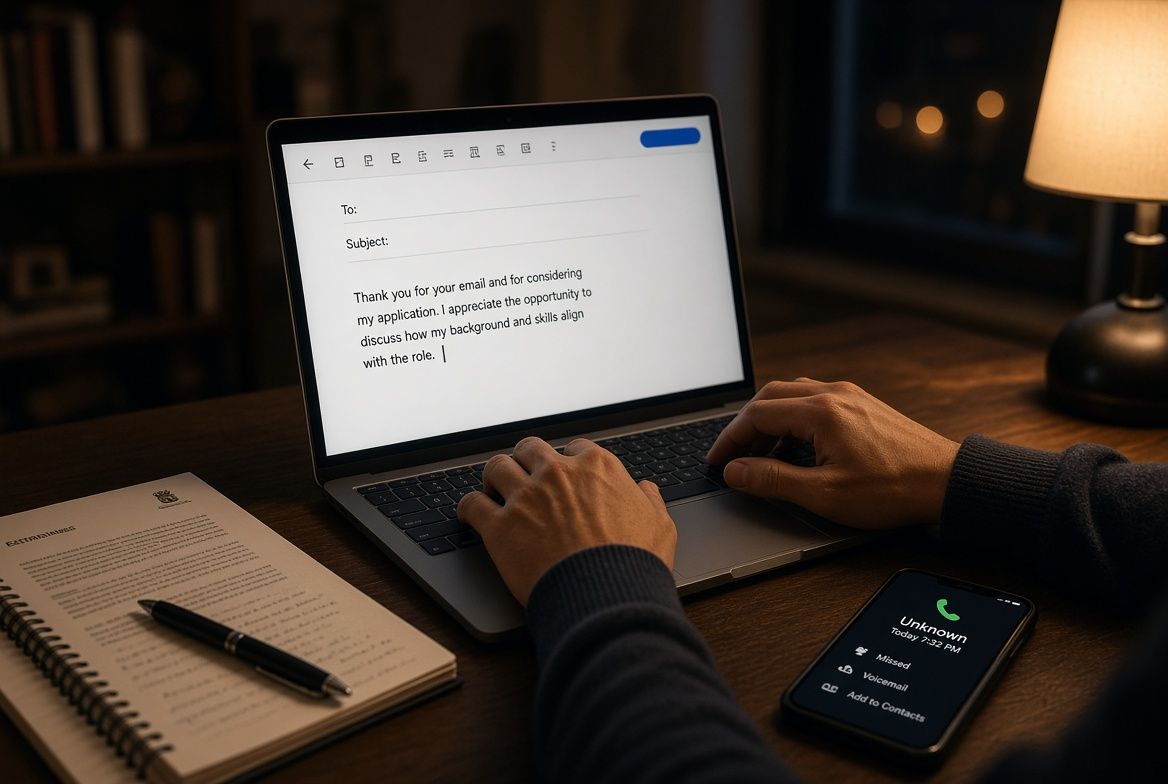
The moment an offer arrives is when most people make their first mistake: they react instead of respond. Whether you receive the offer by email, phone, or video call, your initial response matters more than you think. It sets the frame for everything that follows, from negotiation dynamics to how your new employer perceives your professionalism.
Why you should never accept on the spot
Even if the offer exceeds your expectations. Even if you have been waiting for this call for three weeks. Even if this is the only company you want to work for. Do not say yes immediately.
There are two reasons. First, you need time to evaluate the complete package. The salary number on the phone does not tell you about insurance costs, vesting schedules, or PTO accrual rates. An offer that sounds great at 2 PM can look different at 9 PM when you have read the benefits guide and run the numbers.
Second, accepting immediately signals that you had no other options and no negotiation planned. That is useful information for an employer, but it is not useful for you. Even a brief pause, 24 to 48 hours, preserves your position and communicates that you take financial decisions seriously. That is a quality most employers respect.
The exception: if you are absolutely certain you want this role at the offered terms and you have already done your market research, you can accept on the spot. But even then, ask for the written offer letter before signing anything. Verbal offers and written offers sometimes differ, and you want the document in hand.
Phone and video offers: a script that works
When a recruiter calls with an offer, the conversation usually has a rhythm: they share the good news, present the key terms (title, salary, start date), and wait for your response. Here is how to handle that pause.
"Thank you so much, I'm really excited about this opportunity and appreciate the team's confidence in me. I want to make sure I review everything thoroughly. Could you send me the full offer details in writing, and can I take 48 hours to review and get back to you?"
That response accomplishes several things at once. It expresses enthusiasm (which the recruiter wants to hear). It requests written documentation (which protects you). It establishes a specific timeline (which gives both parties clarity). And it avoids committing to anything.
Take notes during the call. Write down the salary, bonus structure, start date, and anything else the recruiter mentions. Do not rely on memory. Details get fuzzy fast, especially when adrenaline is involved. If the recruiter shares a number you did not expect (higher or lower), keep your tone neutral. "Thank you for walking me through that" is a safe response to any number.
One critical mistake to avoid: do not share your current salary or previous salary expectations during this call. If the offer is lower than you want, the negotiation conversation happens later, after you have had time to prepare your response. Reacting in real time to a disappointing number rarely produces a better outcome than a thoughtful counteroffer delivered the next day.
Email offers: how to reply without giving away leverage
Email offers give you a natural advantage: time. You are not on the spot. You can craft your response carefully. But even here, timing matters.
Reply within a few hours to acknowledge receipt. Letting an offer email sit in your inbox overnight without a response creates unnecessary anxiety on the employer's side. They start wondering if you received it, if you are interested, or if another company has already snapped you up.
Your acknowledgment email should be brief. "Thank you for sending over the offer details. I am very excited about the opportunity to join the [team/company], and I want to review everything carefully. I will follow up with you by [specific day], and please do not hesitate to reach out if you need anything from me in the meantime."
Notice what this email does not do. It does not accept. It does not decline. It does not comment on the salary or any specific terms. It simply confirms receipt, expresses interest, and provides a timeline. That is the entire job of the acknowledgment email.
When you follow up with your actual response (acceptance, counteroffer, or questions), make it a separate communication. This keeps the threads clean and ensures your negotiation points get full attention rather than being buried in a reply chain.
The Department of Labor provides resources on wage standards and worker protections that can inform your evaluation of any offer you receive.
When you plan to decline
Declining an offer well is a career skill that pays dividends over time. The industry you work in is likely smaller than you realize. The recruiter who extended this offer may be the same person recruiting for your ideal role at a different company next year. The hiring manager might become a future colleague, client, or reference. Burn nothing.
Decline by phone if you had a strong personal connection with the recruiter or hiring manager. Follow up with a brief email for documentation. Decline by email if the process was primarily email-based or if you did not build a personal rapport.
Your decline should include genuine appreciation, a brief reason (you do not owe a detailed explanation), and an expression of goodwill. "After careful consideration, I have decided to accept an opportunity that is a closer fit for my current career goals. I want to thank you for the thoughtful process and for the team's time. I have a great deal of respect for the work you are doing at [company], and I hope we can stay connected."
What not to do when declining: ghost the employer (unprofessional and surprisingly common), use the declined offer as leverage in a transparent way ("I'm declining because Company B offered more money" puts you in a transactional light), or leave the door open if you have no intention of walking through it ("maybe in the future" when you mean "never" wastes everyone's time).
The EEOC guidelines remind both employers and candidates that all employment decisions, including offer processes, should reflect fair and equitable practices.
Your next step takes five minutes
Draft your offer acknowledgment template now, before you have an offer in hand. Save it in your notes app or email drafts. When the offer arrives and your heart rate spikes, you will have a professional response ready to send within minutes instead of scrambling to find the right words while riding a wave of excitement. Templates remove emotion from the first response, and that is exactly where you want the emotion removed.