
The standard career advice assumes you have hours of uninterrupted time to dedicate to your job search. Most working parents don't. Here's how to structure a job search that actually fits into the margins of a busy week, without sacrificing effectiveness.
The timing advantage nobody talks about
Jobs get posted on predictable schedules. Most hiring managers finalize listings on Monday mornings after weekend planning sessions. Recruiters review applications in batches, typically Tuesday through Thursday. Applications submitted within the first 48 hours of a posting receive significantly more attention than those arriving a week later.
This means your Tuesday lunch break is more strategically valuable than your Sunday evening marathon session. Twenty focused minutes on Tuesday, when fresh postings are live and recruiters are actively screening, will outperform two scattered hours on Saturday when the hiring world is offline.
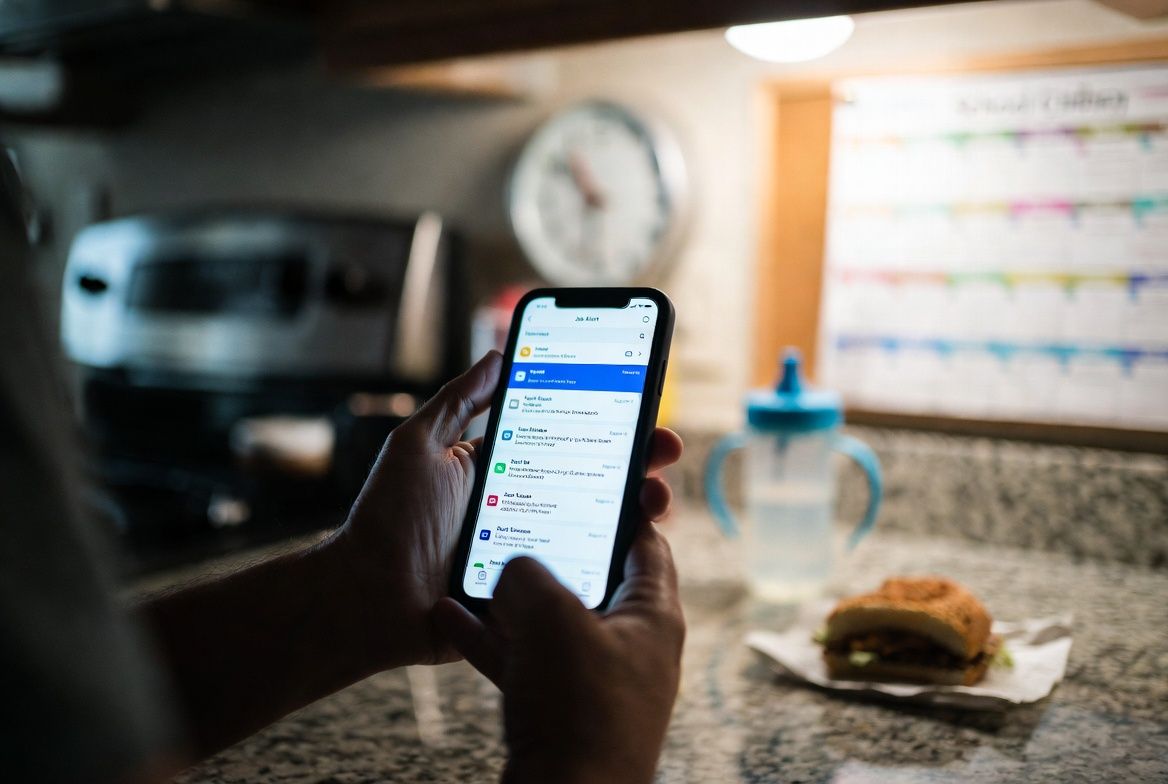
Set up job alerts on three platforms. Indeed, LinkedIn, and one industry-specific board. Let the algorithms do the scanning overnight so you wake up to curated results instead of spending your limited time browsing.
The two-hour weekly framework
If you genuinely have only two hours per week, here's how to allocate them.
Tuesday (30 minutes): Review your job alerts. Identify the two or three strongest matches. Save them. Skim the job descriptions and note which bullet points in your resume need adjusting for each one. Don't apply yet.
Wednesday (45 minutes): Apply to those two or three roles. Tailor your resume for each (swap three to four bullets, adjust the summary). Write a brief cover letter only if the posting specifically requests one or the role is at a company you really want. Submit.
Thursday (15 minutes): Follow up on any applications from the previous week that haven't responded. Send one networking message to a contact at a company you're targeting.
Friday (30 minutes): Do one long-term activity. Update your LinkedIn profile. Research a target company. Draft a template cover letter you can adapt later. Reach out to a former colleague. Rotate through these weekly.
Build a response kit in advance
The biggest time drain in a job search isn't the applications. It's the preparation that should have happened before you needed it. Build these tools once, during a weekend nap or after bedtime, and they'll save you hours every week going forward.
Your response kit needs four things. A master resume with every bullet point you might use, organized by skill category. A cover letter template with blanks for the company name, role, and one specific detail about why you want the position. A list of five references with their current titles and contact information, already confirmed. And a "Why Me" statement: two sentences explaining your core professional value that you can paste into any application's open-response field.
With this kit ready, a single application takes 15 minutes instead of 45.
Respond fast, but not carelessly
When a recruiter calls or emails, response speed matters. A study from SHRM research on hiring practices found that recruiters often move quickly through candidate pools, especially for in-demand roles. Responding within the same business day puts you ahead of candidates who take three days to reply.
Keep your phone notifications on for email during business hours. Draft a standard response: "Thank you for reaching out. I'm very interested in discussing this role. I'm available [insert two time slots]. Looking forward to connecting." That's 30 seconds to send and it signals professionalism.
If a recruiter calls and you're mid-bedtime-routine, it's fine to let it go to voicemail. But call back the next morning before 10 AM. Not the next afternoon. Not the following day.
What to skip when time is tight
Not every piece of standard job search advice deserves your limited hours. Here's what you can safely deprioritize.
Rewriting your LinkedIn summary every week. Once it's solid, leave it alone. Applying to jobs that match less than 50% of your skills. The callback rate won't justify the time investment. Attending networking events where you don't know anyone and there's no structured interaction. Your time is better spent on one direct message to someone specific.
Custom thank-you gifts after interviews. A brief, genuine email is sufficient and faster. Elaborate spreadsheets tracking every application. A simple notes app list with the company name, role, date applied, and current status is enough.
When two hours isn't enough
If you've been searching for eight or more weeks with two hours per week and aren't seeing results, the issue may not be time. It may be targeting, resume quality, or interview skills. Before adding more hours, get a second opinion on your resume. Ask a trusted colleague in your target industry whether your materials match what hiring managers expect. Sometimes a one-hour resume review saves you 20 hours of misdirected applications.
The job search, as of early 2026, averages five to six months for most professionals. That timeline doesn't require full-time effort. It requires consistent, focused effort in the right places at the right times. Two hours a week, spent well, is enough to get there.