
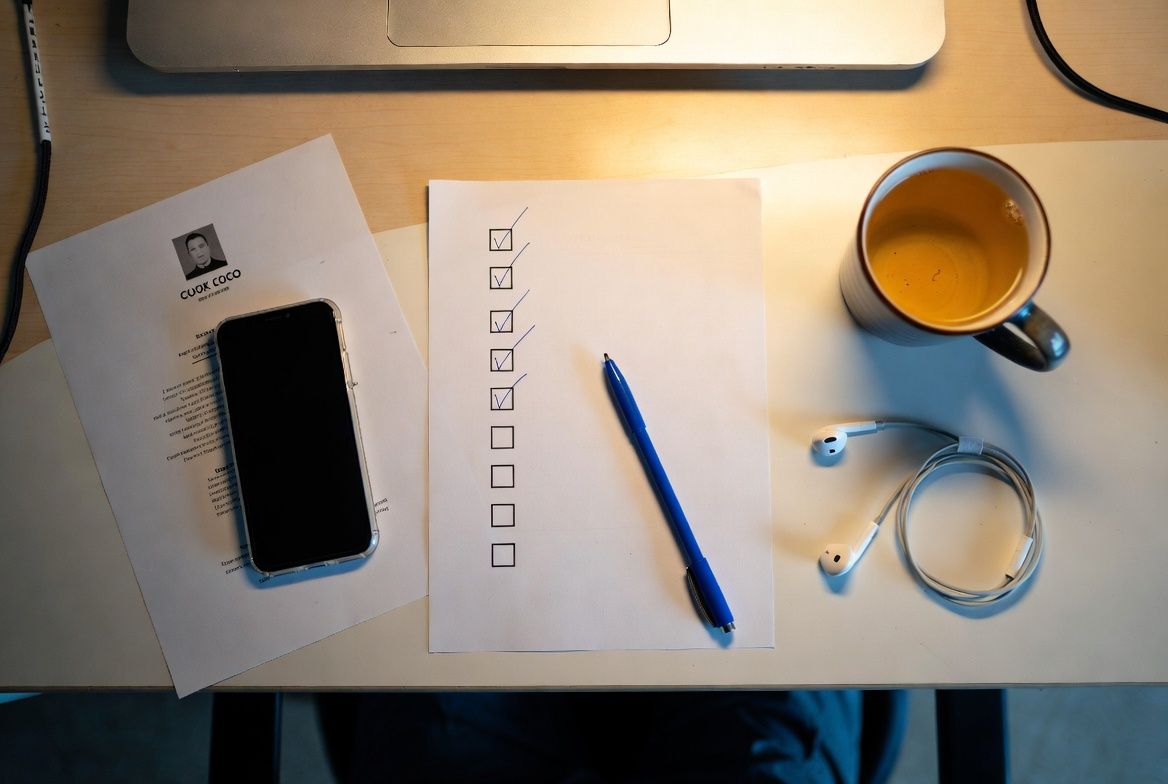
Phone interviews reward preparation more than talent. This checklist breaks everything into a timeline so nothing gets missed and nothing gets crammed into the last hour.
Three to five days before
Confirm the logistics. Who is calling whom? What number should you expect the call from? What time zone is the interviewer in? If any of this is unclear, email your contact to confirm. Misunderstandings about who dials first waste the first three minutes of a short call.
Read the job description again. Not a skim. A careful read. Highlight the skills and qualifications they mention more than once. These are the topics the interviewer will almost certainly ask about. Write one specific example from your experience for each highlighted skill.
Research the company. Spend 15 to 20 minutes on their website, recent news, and LinkedIn page. Know what they do, who they serve, and anything noteworthy from the past six months. Check their Glassdoor reviews for recurring themes about culture and management.
Research the interviewer. If you know their name, look them up on LinkedIn. Note their title, how long they have been at the company, and any shared connections or interests. You do not need to memorize their biography. You need enough to recognize a natural connection point during conversation.
Prepare your salary range. Research the market rate for the role using sites like Levels.fyi, Glassdoor, or the Bureau of Labor Statistics wage data. Factor in your experience level and location. Have a range ready (not a single number).
The day before
Choose your call location. Quiet, good cell signal, minimal echo. Test the acoustics by calling a friend from the spot. Hardwood floors and empty rooms amplify echo. Carpeted rooms with soft furniture absorb sound better.
Arrange childcare. If kids will be home, confirm plans with your partner, sitter, or family member. Let them know the exact time window you need uninterrupted. Have a backup plan if your primary arrangement falls through.
Print your materials. Job description (highlighted), your resume, and your notes with examples and questions. Lay them out on your desk or table so you can reference them without shuffling papers during the call.
Practice out loud. Say your opening pitch once: who you are, your relevant experience, and why you are interested in this role. Time it. Keep it under 90 seconds. Practice answering "Why are you interested in this position?" and "Walk me through your resume."
Check your voicemail. If the call goes to voicemail for any reason, make sure your greeting identifies you clearly and sounds professional.
Morning of the interview
Review your notes. A quick five-minute scan of the job description, your examples, and your questions. This refreshes your memory without creating last-minute anxiety.
Charge your phone. And any backup devices. Plug in your laptop if you plan to reference anything on screen during the call.
Set up your space. Materials spread out, pen and notepad ready, glass of water within reach. Put your phone on Do Not Disturb mode (with an exception for the interviewer's number if you know it). Silence any smart home devices, kitchen timers, or alarms that might go off during the call window.
Get dressed. Not because the interviewer can see you. Because it changes how you carry yourself. Even putting on a professional top half shifts your posture and tone. Some people find that standing during the call gives them more energy.
Warm up your voice. Read a few sentences out loud or practice your pitch one final time. You want your voice clear and awake when you answer the call.
During the call
Answer with your full name. "Hi, this is [First Last]." Brief, professional, confirms identity.
Let the interviewer lead. Some start with small talk. Some get straight to questions. Follow their pace. Do not rush them through pleasantries or drag out the conversation when they are ready to move on.
Keep answers between 30 seconds and 2 minutes. Concise responses show respect for the interviewer's time and keep the conversation moving. Start with the key point, then add supporting detail. Stop when the point is made.
Reference your notes. Glance at your printed materials as needed. This is the advantage of a phone interview. Use it. Just do not rustle papers loudly or type on a keyboard.
Take brief notes. Write down any details the interviewer shares about the role, the team, or the process. You will want these later for your thank-you email and for preparing for the next round.
Ask your top two or three questions. The phone screen is short. Prioritize questions about the timeline, the next steps, and any clarifications you need about the role. Save deeper questions about team culture and growth for later interviews.
Close strong. Thank them for their time. Express genuine interest. Ask about the timeline for next steps if they have not already shared it.
Within 24 hours after
Send a thank-you email. Keep it to three or four sentences. Thank them, reference one topic from the conversation, reiterate your interest, and express that you look forward to the next steps. Send it to the interviewer directly or through your recruiter contact if you do not have their email.
Debrief yourself. Spend five minutes writing down what went well, what felt awkward, and what questions you wish you had asked. Note any topics the interviewer seemed especially interested in. This information helps you prepare for subsequent rounds and improves your performance on future phone interviews.
Update your tracking. If you are managing multiple applications (which you should be), log the date of the call, the interviewer's name, what was discussed, and the expected timeline for follow-up. This prevents the confusion that comes from juggling several processes simultaneously.